Where It All Began: A Landscape Shaped by Water and Work
Brookgreen Gardens sits on land once occupied by four major rice plantations—Brookgreen, Springfield, The Oaks, and Laurel Hill. These plantations operated during the 18th and 19th centuries, shaped by tidal rice cultivation techniques that depended on the rise and fall of the nearby Waccamaw and Ashley rivers.
The waterways, dikes, and old rice fields you see on the property today aren’t just scenic—they’re remnants of an entire agricultural world. The story of this land includes the labor, knowledge, and resilience of the enslaved Africans who engineered complex irrigation systems and helped establish the Lowcountry’s rice economy.
Enter the Founders: Archer and Anna Hyatt Huntington
Brookgreen Gardens wouldn’t exist without the vision of Archer Milton Huntington and his wife, the sculptor Anna Hyatt Huntington. In the late 1920s, the couple purchased the former plantation lands not to develop them, but to protect them—and to create something entirely new.
Anna Hyatt Huntington was already a highly accomplished sculptor known for her expressive animal figures and monumental works. Archer Huntington, a scholar and philanthropist, had long been dedicated to preserving culture and the arts. Their combined passions gave rise to a concept that was nearly unheard of at the time: a garden where art, history, and nature could coexist.
Their dream wasn’t a traditional museum. It wasn’t a botanical garden. It was both—plus something more.
Turning Old Plantations Into a Living Sculpture Garden
Beginning in 1931, the Huntingtons began converting the land into what would become the first public sculpture garden in America devoted entirely to figurative art. They designed winding paths, open lawns, and reflective pools where art and nature could interact.
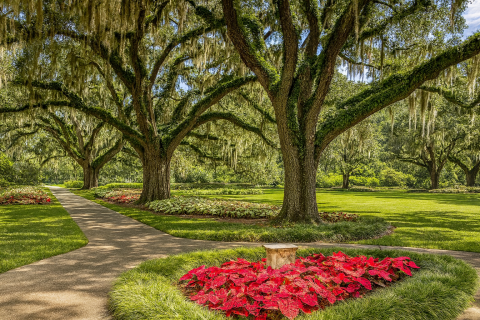
Anna’s sculptures—along with works from other leading American figurative artists—were placed throughout the gardens in a setting that feels more like a story unfolding than an exhibit. Each sculpture is intentionally framed by the landscape: moss-draped live oaks, blooming camellias, and quiet ponds shaped by centuries-old water systems.
Instead of erasing the land’s plantation past, the Huntingtons preserved many of its structures and landscapes, allowing visitors to understand the complicated history that shaped the region.
A Wildlife Preserve Ahead of Its Time
The Huntingtons’ vision extended beyond art. They also wanted to protect the natural environment and local wildlife. Today, Brookgreen includes a full wildlife preserve with native species, trails through protected longleaf pine habitats, and wetlands teeming with birds and river life.
This fusion of environmentally protected land, historic plantation remnants, and world-class art is what makes Brookgreen unique. Every turn in the path connects visitors to another layer of the Lowcountry’s story.
Why Brookgreen Gardens Is a Must-See for Visitors Today
Brookgreen is more than a garden—it’s an experience designed to immerse visitors in the cultural, ecological, and artistic spirit of coastal South Carolina.
Guests can explore:
- One of the country’s largest collections of American figurative sculpture
- Historic rice field landscapes that reveal the region’s agricultural past
- Educational exhibits on Gullah Geechee culture and local history
- The Lowcountry Zoo, featuring native species from river otters to red foxes
- Seasonal blooms that transform the gardens with color year-round
- Special events like Nights of a Thousand Candles, art workshops, and nature programs
Every visit feels different depending on the season, the light, or the path you choose.
Planning Your Visit to Brookgreen Gardens
For travelers staying with Tidelife Vacation Rentals, Brookgreen Gardens is just a short, scenic drive from Pawleys Island and Murrells Inlet. Whether you’re exploring with family, taking a peaceful solo stroll, or searching for the perfect photography spot, it’s a place that rewards slow wandering and open curiosity.
It’s not just an attraction—it’s a living museum that honors the intertwined histories of art, land, and the people who shaped it.